
Quotex Market Pakistan: Features, Assets & Trading Guide
Quotex Trading Hours During Ramadan in Pakistan: What to Expect
Ramadan changes the rhythm of daily life across Pakistan, and that shift reaches the trading screen too. If you trade quick trading on quotex, the month brings different session overlaps, thinner liquidity in some windows, and a nightly routine that can work in your favour if you plan around it. This guide walks through what the Ramadan schedule looks like for Pakistani traders, which hours tend to stay active, and how to adjust your approach without forcing trades into quiet markets.
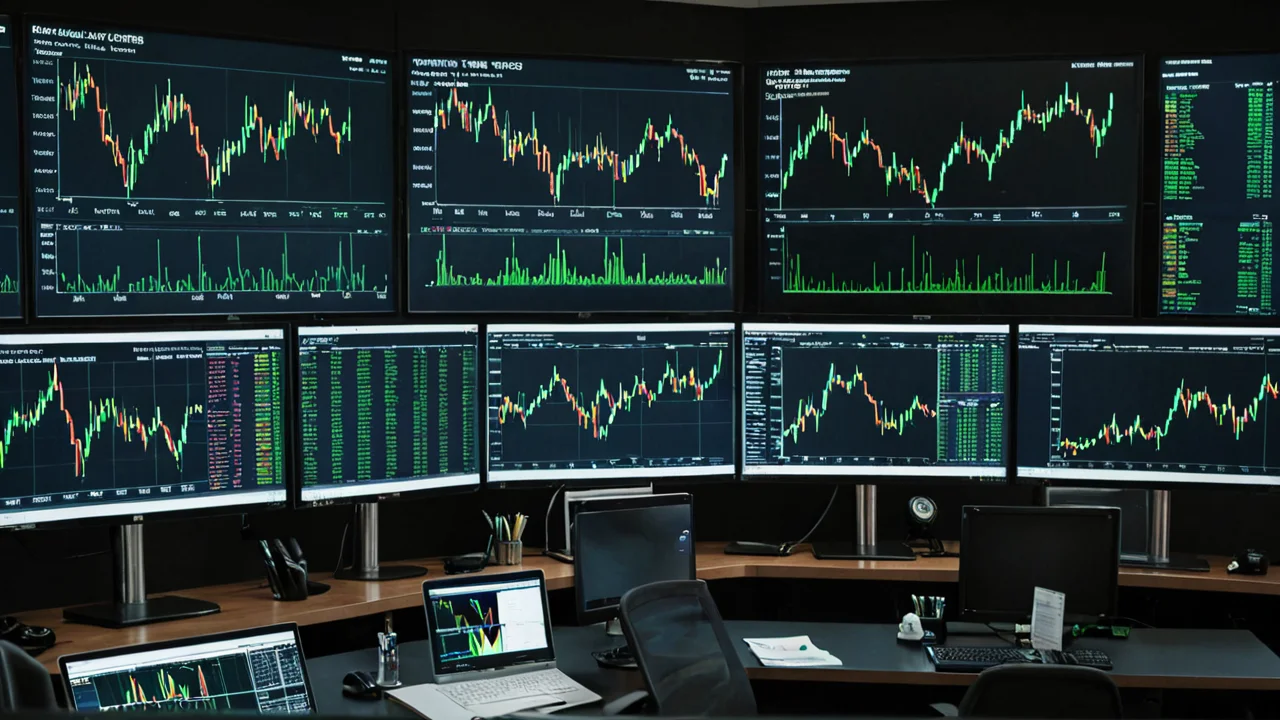

How Ramadan Reshapes The Trading Day In Pakistan
The core mechanics of global markets do not change during Ramadan. Forex, commodities, and index feeds keep running on their usual clocks because they are driven by exchanges in London, New York, and Tokyo. What changes is you. Sehri, Iftar, Taraweeh, and a compressed workday push most Pakistani traders into two distinct windows: a short pre-dawn block and a longer post-Iftar block that stretches into the night.
That reality matters because quick trading rewards attention. A trader who is half-awake at 3 PM after a long fast is not the same trader who is alert at 10 PM after dinner and prayer. The Ramadan schedule is less about the platform changing and more about when your own focus peaks.
Account conditions at a glance
| Minimum deposit | $10 |
|---|---|
| Minimum trade | $1 |
| Maximum payout | up to 98% |
Conditions declared by the broker; checked against public sources · 2026-10-12 · source
- Pre-dawn window (roughly 2
- 00 to 5:00 AM PKT): Asian session tail, thin volume, wider spreads on some instruments
- Afternoon window (12
- 00 to 4:00 PM PKT): London open overlap, but low personal energy for many
- Post-Iftar window (7
- 00 PM to 12:00 AM PKT): London-New York overlap, highest liquidity of the day
Key Takeaway: Ramadan does not shrink the market, it reshuffles when you should be watching it. The post-Iftar hours usually carry the cleanest price action for Pakistani traders.
Trade on a smoother platform
Faster charts, cleaner UI, fewer crashes.
Quotex Ramadan Market Schedule For Pakistani Traders
Quotex keeps its platform accessible around the clock, so there is no "Ramadan closure" to worry about. What you will notice is that certain instruments behave differently depending on which global session is live. Currency pairs tied to the euro and dollar stay liquid through the London and New York sessions, while crypto and some synthetic instruments run on their own schedules that do not care about Ramadan at all.
For a Pakistani trader, the practical question is not "is Quotex open" but "which hours give me the tightest conditions." The answer sits in the overlap tradeween European and American trading, which lands in the evening PKT and lines up neatly with the post-Iftar routine. If you want a broader look at how the platform handles different sessions, the quotex-market-overview-pakistan page breaks down instrument categories and their typical activity windows.
Work out the payout
Profit $0
Returned in total $0
Lost if the trade fails $0
The calculator uses the payout the broker declares; the actual percentage depends on the asset and the moment of entry.
- Currency pairs
- most active during London and New York hours
- Commodities like gold and oil
- responsive to US data releases in the evening PKT
- Crypto
- trades continuously, including through Ramadan nights
- OTC and synthetic assets
- available when standard markets are closed
Key Takeaway: The Quotex Ramadan schedule mirrors global session hours, not a special holiday calendar. Plan around London-New York overlap for the best conditions.
Open an account in minutes
No KYC delays — start trading the same day.
Volatility Patterns During The Holy Month
Volatility does not disappear in Ramadan, but its distribution across the day shifts. In many Muslim-majority markets, trading desks in the Gulf and Southeast Asia slow down during daytime hours, which can thin out liquidity in the Asian session. That thinning shows up as choppier price movement on some pairs and wider spreads on others.
The evening tells a different story. Once Western markets come online, volume returns and price action becomes more directional. Traders who rely on momentum and breakout setups often find the post-Iftar window far more forgiving than the quiet afternoon.
One trap worth naming: the minutes right around Iftar itself. Many traders step away from the screen, and that gap can produce sudden spikes or gaps that catch pending positions off guard. If you hold trades through Iftar, understand that you are exposed to a low-attention window where price can move without you watching.
The vocabulary of this part
- Payout percentage
- The share of the stake returned as profit on a winning contract, stated per asset before entry.
- Stake
- The amount committed to one contract. On a loss it is lost in full.
- Break-even rate
- The share of winning trades needed to end flat at a given payout percentage.
- Daytime Asian session
- thinner volume, more false breakouts
- Iftar window
- sharp moves possible, low trader attention
- Post-Iftar evening
- restored liquidity, cleaner trends
- Late night
- volume fades as New York winds down
Key Takeaway: Volatility clusters in the evening during Ramadan. The afternoon is where most avoidable losses happen.
Try quotex for yourself
Free demo first; switch to real money when ready.
Best Trading Times After Iftar
The hours tradeween roughly 8:00 PM and 11:00 PM PKT tend to be the sweet spot for Pakistani traders during Ramadan. London is still active, New York has fully opened, and major economic data from the US typically lands in this window. For quick trading, that combination means clearer directional bias and more reliable short-term setups.
This is also when most traders have finished dinner, prayed, and settled into a comfortable routine. Focus is higher, distractions are lower, and there is no hunger pulling at concentration. If you can only trade one block per day during Ramadan, this is the one to protect.
For traders who prefer a structured session rather than reacting to whatever the market offers, the quotex-live-trading-pakistan guide covers how to build a repeatable routine around live market hours. The same principles apply during Ramadan, just shifted later in the day.
- Set a fixed start time after Iftar and stick to it
- Watch for US data releases in the 8:00 to 10:00 PM PKT range
- Avoid trading past midnight if fatigue sets in
- Keep position sizes consistent with your normal plan
Key Takeaway: The post-Iftar block is the closest thing to a "normal" trading session during Ramadan. Treat it as your primary window.
Terms used in this section
- Native app
- An application installed from a store and built for the operating system it runs on.
- Web terminal
- The same platform used in a browser, without installation.
- Push notification
- A message the app shows outside the browser, used for price alerts and contract results.
Test the platform first
Identical to live mode — same charts, same speed.
OTC And Weekend Availability During Ramadan
Ramadan does not pause weekends, and it does not change how Quotex handles OTC instruments. When standard forex markets close on Saturday and Sunday, OTC and synthetic assets remain available for traders who want to stay active. This matters more during Ramadan because many people have flexible schedules and more free time in the evenings, including weekends.
OTC pricing is generated by the platform rather than a central exchange, so it behaves differently from standard pairs. Volatility can be smoother in some periods and sharper in others, and the usual session-based logic does not apply. If you are new to OTC trading, the quotex-otc-weekend-trading-strategy-pakistan breakdown explains how these instruments differ and where the risks sit.
- OTC assets trade through the weekend, including Ramadan weekends
- Pricing is platform-generated, not exchange-driven
- Volatility patterns differ from standard forex pairs
- Suitable for traders who understand the added risk profile
Key Takeaway: Weekend OTC trading stays open during Ramadan. Just remember that OTC behaviour is not the same as standard market behaviour.
What these terms mean
- Risk per trade
- The share of the balance committed to a single contract.
- Technical indicator
- A calculation drawn over price history; it describes what has happened, not what will.
- Position sizing
- The rule that converts a balance into the amount committed to one contract.
Practical Tips For Trading While Fasting
Trading while fasting is a discipline question as much as a strategy question. Hunger, dehydration, and disrupted sleep all affect decision-making, and quick trading leaves little room for impulsive entries. A few adjustments make a real difference over a full month.
First, cut your screen time. Fewer, higher-quality trades beat a long session of clicking. Second, avoid trading in the last hour before Iftar, when blood sugar is lowest and patience is thinnest. Third, keep a written plan and check every trade against it before you enter. Discipline during Ramadan is not about trading more, it is about trading deliberately.
- Reduce total session length and focus on quality setups
- Skip the pre-Iftar hour entirely if you can
- Write your entry criteria down and follow them
- Take breaks for prayer and rest without guilt
Key Takeaway: The biggest Ramadan risk is not the market, it is your own fatigue. Trade less, plan more.
What these terms mean
- Trading journal
- A record of entries, exits and reasons, kept to review decisions rather than outcomes.
- Underlying asset
- The instrument a contract is written on — a currency pair, an index, a commodity or a crypto asset.
- Spread
- The gap between buying and selling price quoted at the same moment.
Managing Risk Through A Shorter Trading Month
Many traders naturally trade fewer hours during Ramadan, and that is not a problem. It is an opportunity to tighten risk management. With fewer trades, each one carries more weight, so position sizing and stop discipline matter more than usual.
A simple approach: decide your maximum daily loss before you open the platform, and stop the moment you hit it. Do the same for wins if you tend to overtrade after a good streak. Ramadan is a good month to build habits that outlast the holiday, because the reduced schedule forces you to be selective.
- Set a daily loss limit and honour it without exception
- Cap the number of trades per session
- Review your results weekly, not daily
- Use the quieter month to test one strategy change at a time
Key Takeaway: A shorter trading month is a chance to sharpen risk control, not a reason to chase bigger positions.
What these terms mean
- Trading session
- The hours an asset is quoted; outside them contracts on it cannot be opened.
- Market order
- An instruction to open a position at the price available now, not at a chosen level.
- Slippage
- The gap between the price requested and the price received when the market moves during execution.
Frequently Asked Questions
-
Does Quotex close during Ramadan in Pakistan?
No. The platform stays accessible throughout Ramadan. What changes is the activity level of underlying markets, not the availability of the Quotex platform itself.
-
What are the best Quotex trading hours during Ramadan for Pakistani traders?
The post-Iftar window, roughly 8:00 PM to 11:00 PM PKT, tends to offer the best combination of liquidity, focus, and market activity. It overlaps with the London-New York session.
-
Is volatility lower during Ramadan?
Daytime volatility can be thinner, especially in the Asian session. Evening volatility usually returns to normal levels once Western markets open.
-
Can I trade OTC assets on Quotex during Ramadan weekends?
Yes. OTC and synthetic instruments remain available on weekends, including during Ramadan. Their pricing behaviour differs from standard forex pairs, so treat them accordingly.
-
Should I change my strategy for Ramadan?
Not necessarily the strategy itself, but the timing and frequency of your trades. Fewer, more deliberate entries usually work tradeter than long, unfocused sessions during the month.
-
Is it safe to hold trades through Iftar?
It carries extra risk. Attention drops around Iftar and price can move sharply in thin conditions. If you cannot watch the screen, consider closing positions beforehand.
Ready to plan your Ramadan trading routine? Open quotex Account and set up your session around the hours that actually work for you.
Short answers
- Does Quotex close during Ramadan in Pakistan?
- No
- What are the best Quotex trading hours during Ramadan for Pakistani traders?
- The post-Iftar window, roughly 8:00 PM to 11:00 PM PKT, tends to offer the best combination of liquidity,…
- Is volatility lower during Ramadan?
- Daytime volatility can be thinner, especially in the Asian session
- Can I trade OTC assets on Quotex during Ramadan weekends?
- Yes
- Should I change my strategy for Ramadan?
- Not necessarily the strategy itself, but the timing and frequency of your trades
- Is it safe to hold trades through Iftar?
- It carries extra risk