
Quotex Review IO: What Third-Party Sites Reveal
Quotex $1 Trading Strategy for Pakistan: How to Trade with a Small Account
Trading with a small balance is not a limitation, it is a skill you can build. This guide walks Pakistani traders through a practical $1 trading strategy on quotex, from setting up your account to choosing assets and protecting what you deposit. If you want to start small and grow steadily, the steps below are built for exactly that.
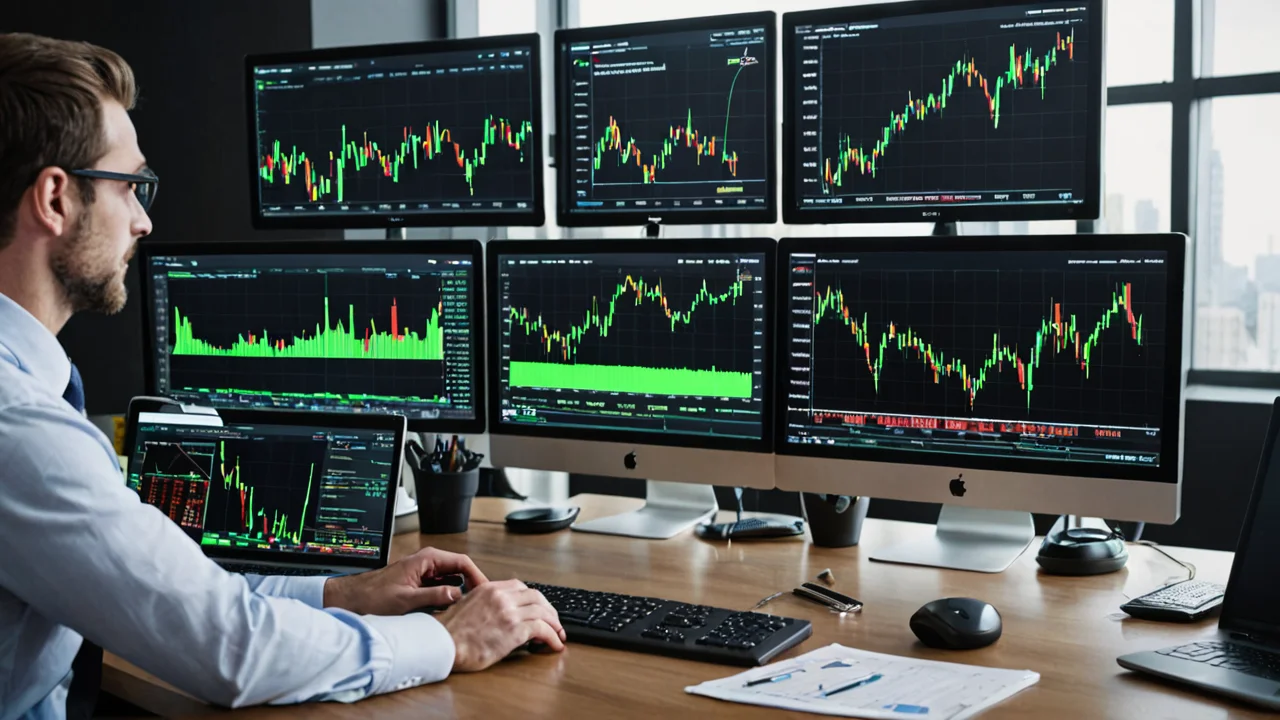

Why $1 Per Trade Works for Pakistani Traders
Most people in Pakistan start trading with a modest amount, often because they want to test the platform before committing more. A $1 trade size lets you do that without pressure. You learn how order execution feels, how price moves during your session, and how your own emotions react when real money is on the line.
The real advantage is longevity. A small trade size stretches your balance across many attempts, which matters far more than chasing one big win. Your goal in the first weeks is not profit, it is repetition and discipline.
- You can place more trades and gather real experience
- Losses stay small enough to recover from
- You build a routine instead of trading on one outcome
- You learn which assets and sessions suit your schedule
Key Takeaway: A $1 trade size is a training tool. Treat your first month as paid practice, not as a race to double your money.
Before you place anything, read the quotex trading guide pakistan so you understand how orders, payouts, and expiry times connect. That foundation makes every step below easier to apply.
Account conditions at a glance
| Minimum deposit | $10 |
|---|---|
| Minimum trade | $1 |
| Maximum payout | up to 98% |
Conditions declared by the broker; checked against public sources · 2026-10-12 · source
Setting Up Your Quotex Account in Pakistan
Getting started takes only a few minutes. You register with an email or phone number, verify your details, and fund the account. The quotex minimum deposit pakistan payment methods page covers which local options are available, so check that first if you are unsure how to top up.
Once your account is live, spend time in the demo mode. Demo trading uses virtual funds, which means you can rehearse the exact $1 strategy without risking anything. Many Pakistani traders skip this step and regret it. Do not.
- Complete your profile and verification early
- Test the interface on both mobile and desktop
- Practice placing trades with the same size you plan to use live
- Note how long each trade takes to settle
When you switch to a live account, keep your first deposit small. There is no reason to fund heavily before you have proven to yourself that your routine works. Start with the minimum, trade $1 positions, and add more only after a consistent stretch.
Key Takeaway: Demo first, live second, bigger deposits last. The order matters more than the amount.
Work out the payout
Profit $0
Returned in total $0
Lost if the trade fails $0
The calculator uses the payout the broker declares; the actual percentage depends on the asset and the moment of entry.
Choosing the Right Assets for a Small Account
Not every asset behaves well for a $1 trade. Volatile pairs can wipe a small position in seconds, while very quiet assets may not move enough to reach your target. The sweet spot is an asset with steady movement during your chosen session.
Currency pairs tend to be the most accessible for beginners because they trade around the clock and have plenty of liquidity. Popular choices include major pairs that move predictably during the London and New York sessions. For Pakistani traders, the evening hours often line up well with European market activity.
- Major currency pairs for consistent, readable movement
- Commodities like gold for traders who prefer slower, larger swings
- Avoid exotic pairs until you understand their erratic behavior
- Stick to two or three assets and learn them deeply
Focus beats variety. Watching the same asset every day teaches you its rhythm, and that rhythm is what a small account needs to survive.
Key Takeaway: Pick two or three assets, learn their daily patterns, and ignore everything else until you are profitable.
The vocabulary of this part
- Payout percentage
- The share of the stake returned as profit on a winning contract, stated per asset before entry.
- Stake
- The amount committed to one contract. On a loss it is lost in full.
- Break-even rate
- The share of winning trades needed to end flat at a given payout percentage.
The Core $1 Trading Strategy Step by Step
Here is the routine. It is simple on purpose, because complicated plans fall apart under pressure.
First, open your chart and let it run for a few minutes before you trade. You are looking for a clear direction, not a random spike. Second, identify a recent support or resistance level. Third, wait for price to approach that level and show a reaction, such as a rejection candle or a slowdown in momentum.
Only then do you place your $1 trade in the direction the reaction suggests. Set a short expiry that matches the timeframe you are watching. If the setup is not obvious, skip it. There will always be another opportunity.
- Wait for price to reach a level you marked in advance
- Confirm with a reaction, not a guess
- Enter with $1 and a short expiry
- Accept the result and move on
The discipline is in the waiting. Most small accounts fail because traders enter too often, not because their analysis is wrong. Pair this routine with the rules in our money management guide so your sizing stays consistent across every session.
Key Takeaway: One clean setup is worth more than ten rushed trades. If you cannot explain why you entered, do not enter.
Terms used in this section
- Native app
- An application installed from a store and built for the operating system it runs on.
- Web terminal
- The same platform used in a browser, without installation.
- Push notification
- A message the app shows outside the browser, used for price alerts and contract results.
Backtest before going live
Run 50+ trades on demo before risking capital.
Risk Management Rules for Low Balance Accounts
A small balance demands strict rules. Without them, three bad trades can end your week. The first rule is simple: never risk more than a small fixed percentage of your balance on a single trade. With a $1 trade size, you already control this, but you must resist the urge to increase size after a loss.
The second rule is a daily stop. Decide in advance how many losses you will accept before you close the platform for the day. Two or three is a reasonable limit for a beginner. When you hit it, you stop, no exceptions.
- Fixed trade size, no doubling after losses
- A daily loss limit you actually respect
- A daily target that keeps you from overtrading
- A break after any emotional decision
Revenge trading is the single fastest way to empty a small account. The moment you feel the urge to win money back immediately, close the chart and walk away.
Key Takeaway: Your rules protect you from yourself. Write them down and follow them even when you feel certain.
What these terms mean
- Risk per trade
- The share of the balance committed to a single contract.
- Technical indicator
- A calculation drawn over price history; it describes what has happened, not what will.
- Position sizing
- The rule that converts a balance into the amount committed to one contract.
Realistic Profit Expectations with $1 Trades
Let us be honest about the math. With a $1 trade and a typical payout, a winning trade returns a fraction of your stake as profit. That means meaningful income from $1 trades requires either a large number of trades or a larger account over time. Neither happens overnight.
What a small account can realistically deliver is experience and a proven process. If you can grow a small balance slowly while keeping your rules intact, you have built something far more valuable than a quick win. Scale your trade size only after your results are consistent across many sessions.
- Expect slow growth, not fast multiplication
- Judge yourself on rule-following, not daily profit
- Increase size only after a stable track record
- Withdraw a portion of profits to stay grounded
Key Takeaway: A small account is a classroom. Graduation means consistency, and consistency is what eventually allows bigger positions.
The vocabulary of this part
- Refund on a loss
- A share of the stake some platforms return on a losing contract, stated per asset.
- Expiry price
- The quote used to settle a contract at its expiry moment.
- Underlying asset
- The instrument a contract is written on — a currency pair, an index, a commodity or a crypto asset.
Common Mistakes Pakistani Traders Make
The same errors show up again and again. Traders increase size after a loss, trade during emotional moments, or jump tradeween assets without learning any of them. Others ignore the session timing and trade when liquidity is thin, which makes price behave unpredictably.
Another frequent mistake is treating trading like a lottery. A $1 trade feels harmless, so some traders place dozens of them without any plan, and the small losses add up fast. The size is small, but the habit is expensive.
- Doubling trade size to recover a loss
- Trading without a marked level or reason
- Switching assets every few minutes
- Ignoring the daily stop you set for yourself
Avoiding these mistakes is not glamorous, but it is what separates traders who last from those who quit. Review your own behavior at the end of each week and correct one habit at a time.
Key Takeaway: Small, repeated errors drain an account faster than one big loss. Fix the habit, not just the trade.
The vocabulary of this part
- Spread
- The gap between buying and selling price quoted at the same moment.
- Trading session
- The hours an asset is quoted; outside them contracts on it cannot be opened.
- Market order
- An instruction to open a position at the price available now, not at a chosen level.
Frequently Asked Questions
-
What is the minimum trade amount on Quotex in Pakistan?
Quotex allows very small trade sizes, and $1 per trade is a practical starting point for beginners. Check the platform directly for the exact minimum, since it can vary by asset.
-
Can I really grow an account starting with just $1 trades?
Growth is possible but slow. With $1 trades, your focus should be on building skill and consistency first. Scaling up comes later, once your results are stable.
-
Which assets are best for a small account?
Major currency pairs are usually the most beginner-friendly because they move steadily and trade around the clock. Stick to two or three assets and learn their patterns before adding more.
-
How do I deposit money into Quotex from Pakistan?
Several local payment options are available. Our guide to quotex minimum deposit pakistan payment methods explains the available routes and how to fund your account.
-
How many trades should I place per day with a small balance?
Fewer than you think. Two or three quality setups are enough. Overtrading is the most common reason small accounts fail, so let the market come to you.
-
Is a $1 strategy safe for beginners?
It is safer than trading large sizes, because your losses stay small while you learn. It is not risk-free, so always use a daily loss limit and never trade money you cannot afford to lose.
Ready to put this plan into practice? Open quotex Account and start with a single $1 trade today.
Short answers
- What is the minimum trade amount on Quotex in Pakistan?
- Quotex allows very small trade sizes, and $1 per trade is a practical starting point for beginners
- Can I really grow an account starting with just $1 trades?
- Growth is possible but slow
- Which assets are best for a small account?
- Major currency pairs are usually the most beginner-friendly because they move steadily and trade around…
- How do I deposit money into Quotex from Pakistan?
- Several local payment options are available
- How many trades should I place per day with a small balance?
- Fewer than you think
- Is a $1 strategy safe for beginners?
- It is safer than trading large sizes, because your losses stay small while you learn